Senosan GmbH, an Austrian based, plastic sheeting company has achieved worldwide recognition for their high gloss acrylic films. Senoplast GmbH (Senosan’s mother company) has been manufacturing acrylic sheeting for cabinetry finishes, as well as formable car and shower linings, for a long time. In 2011, they added AM1800TopX to their high gloss cabinetry finish range which we use for our Acrygloss® and Acrymatte® products.
We get this specialist acrylic pressed onto a high quality CARB2 (similar to E0 formaldehyde emission rating) moisture resistant MDF on world-leading equipment by our supplier in Europe. We partner closely with our suppliers to ensure we are happy with the products and processes, to ensure the highest quality doors.
The Structure of the Acrylic
This AM1800TopX (‘1800X’) high gloss finish differs from other materials on the market due to its depth of gloss, unique scratch resistance, and easy maintenance. It consists of a .5mm base layer of ABS, with .2mm PMMA (a type of acrylic), topped with a scratch resistant hardcoat on the surface. ABS gives better resistance to cracking than straight acrylic, and acrylic creates a better reflection than ABS. The combination of these two raw materials, united by co-extrusion, gives our Acrygloss increased strength, better colour stability, and higher cracking resistance than a straight acrylic option.
The Cherry on the Top
The cherry on the top – the scratch resistant hardcoat – is to make your job easier and stress free! This hardcoat adds durability, while not affecting the quality of the mirror-like finish. It also means you do not need to worry about accidentally scratching a panel while you pull off the protective film.
“How scratch resistant is Acrygloss?” you may ask. It’s passed IHD-W-466 Method 1 Class A with a loss of gloss of <20%. Don’t know what that means? Don’t worry!
How about this: it’s steel wool resistant. Senoplast’s testing method for scratch resistance is ‘SENO company standard QPA-25-LT’. The test involves rubbing the surface with steel wool, type 00 (the kind used for buffing and cleaning golf clubs or removing old finishes on antiques) with a load of 1kg. At 20 strokes, no scratches or changes are visible on the surface of Acrygloss.
Regular co-extruded acrylic gloss sheets which were traditionally used are soft and need to ‘cure’ for a day or two once the protective film is removed. Often a small tear created in the protective film during drilling and installation will mean a scratch in the door, only seen when the protective film is finally removed – not with Acrygloss®. No curing is required, as the surface is hard even before the protective film is removed. Even if the protective film is torn, the surface is normally un-scratched, eliminating many of the annoying surprise scratches noticed when the film is removed on site.
Why choose an acrylic over lacquer?
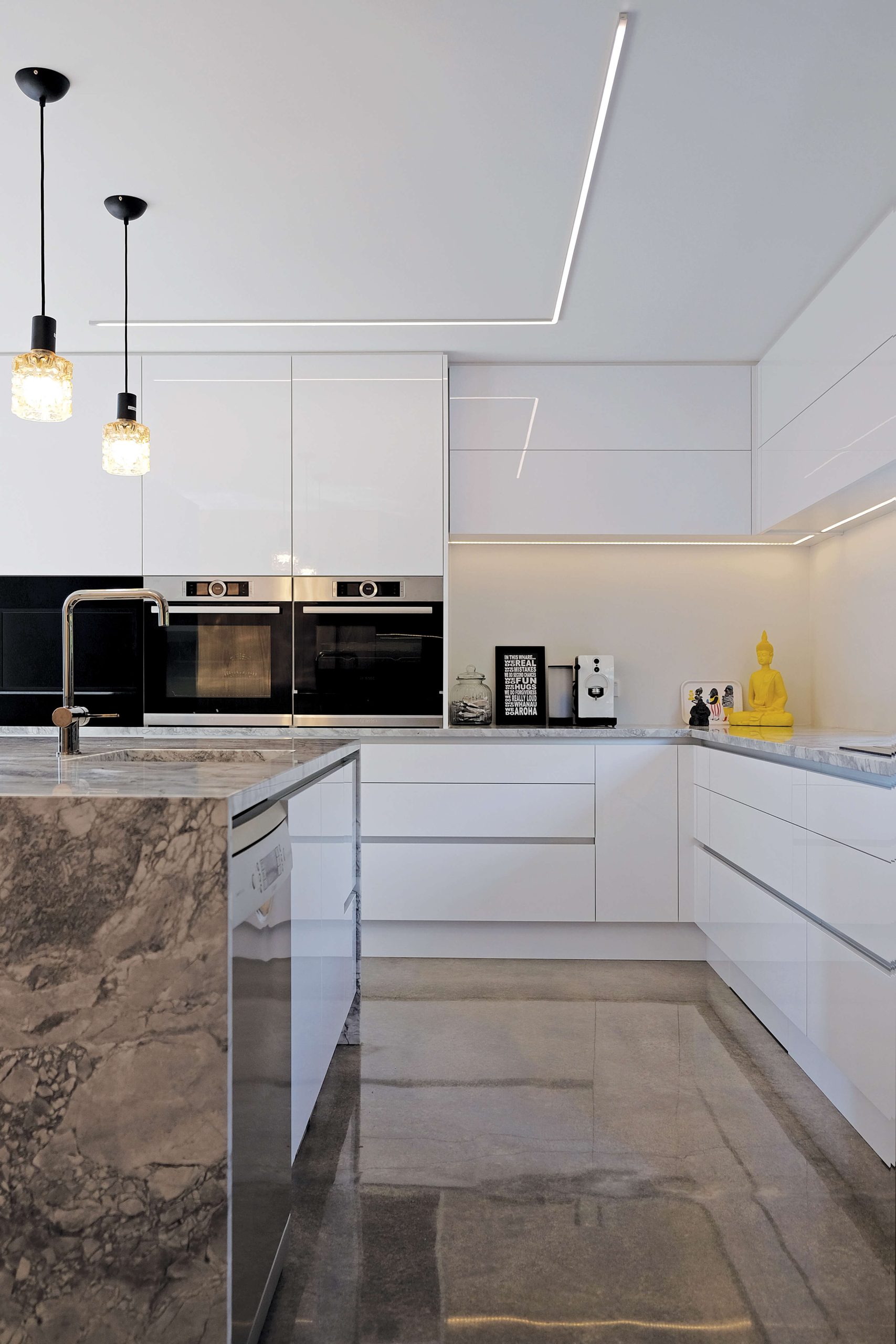
Why use acrylic gloss instead of lacquer or high gloss melamine? The depth of gloss is much greater. Look at a reflection in the distance (not your face! Look at something further away like a line in the window.) Is it a clear line? Or fuzzy? Acrylic gloss gives a much deeper reflection than most other options.
Acrygloss is easy to clean. With each order we supply a can of VuPlex, a special high gloss surface cleaner. VuPlex removes the static on the surface, making finger prints a thing of the past. The surface can easily be wiped clean using a soft, damp cloth.
NOTE: Although Acrygloss is scratch resistant, we still recommend you leave the protective film on the surface until the doors are installed.